
Annual ryegrass (Lolium multiflorum, ARG), for seed production can be parasitized by Anguina funesta or seed gall nematodes (SGN), which can vector Rathayibacter toxicus, a bacterium lethal to grazing animals. Because of this, SGN are strictly regulated in trade. Recent reports have indicated the presence of SGN in 50% of ARG seed fields surveyed in the Willamette Valley (Rivedal et al. 2024). The presence of SGN in Oregon grass seed has led to an increase in seed lot rejections in some markets due to zero-tolerance limits, particularly in Asia (Rivedal et al. 2024). From 2019 to 2021, over 1 million pounds were rejected at Asian ports due to the presence of SGN (Rivedal et al. 2024), and since then, the rejections have only increased. Currently, multiple Asian markets are inaccessible to Oregon ARG producers due to SGN-infested seed.
Lifecycle
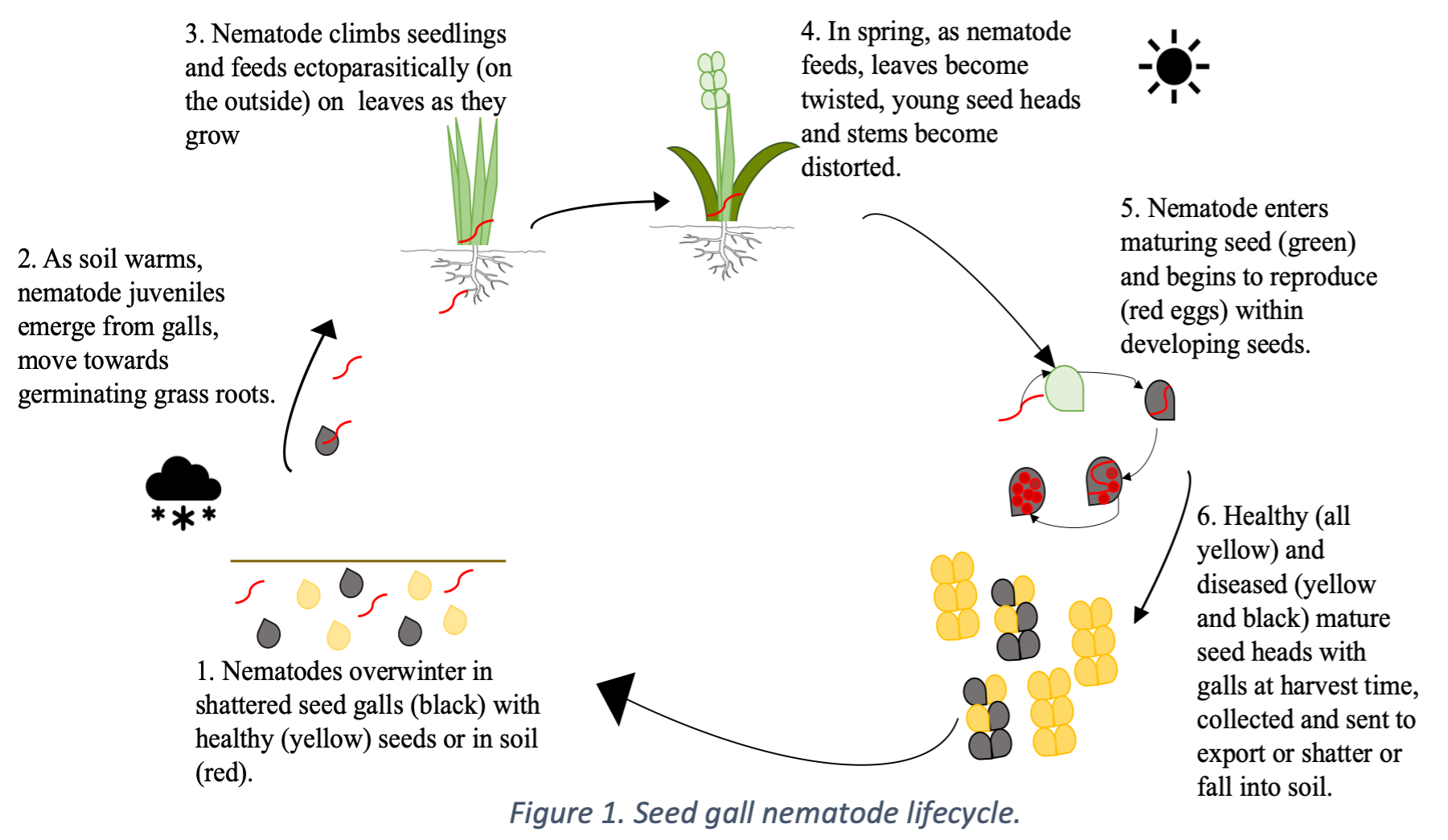
The lifecycle of the SGN includes a soil stage, plant feeding stage, and seed gall survival stage (Fig. 1). This lifecycle poses challenges for control of these nematodes for Oregon’s grass seed growers. The limited soil life stage and long-lived galls reduce typical nematode control efficacy. Today, there are no labeled nematicides, no known resistant varieties on the market, and no non-chemical control measures currently available for SGN in Oregon.
Current Research Efforts to Provide Oregon ARG Growers with SGN Controls
Nematicides: We are evaluating nematicidal chemicals in the field at fall and spring timings for their control of SGN in ARG seed production, with the goal of identifying a spray program for in-field use.
Seed Cleaning: We are evaluating mechanical seed cleaning to eliminate seed galls in exported seed. We are comparing the use of air screens to gravity table seed sorting and have been able to remove 99% of galls in samples using these methods thus far.
Resistance Breeding: Known SGN resistance is found in some Lolium rigidum populations, however the resistance status of American L. multiflorum germplasm is unknown. We are evaluating a subset of the USDA germplasm collection of diploid and tetraploid ARG accessions to evaluate for SGN resistance. We anticipate this effort leading to improved germplasm to be incorporated into American breeding programs.
In the future, we will expand the toolbox of management strategies for SGN to allow for greater access to important markets for Oregon grass seed globally.
Contributed by: Hannah Rivedal | USDA-ARS
Tags: Oregon Grass Seed, oregon seed council, SGN Management