OSC Announces Opening of 2026 Scholarship Application Process

The Oregon Seed Council announced the opening of its 2026 scholarship application process.

The Oregon Seed Council will be offering three college scholarships this year in the amounts of $2,000, $1,000 and $500.

A scholarship committee will review applications, conduct interviews and choose the scholarship recipients.

The scholarship will be available for college bound students who come from a farm involved in seed production, have worked on a seed farm or have worked for a seed company. High school seniors, home school seniors, or current college students are eligible. Past winners are encouraged to apply. Applications must include responses to a questionnaire, an essay of less than 500 words describing why the student deserves the scholarship, and three letters of reference.

Students interested in applying should review rules and critera and the 2026 scholarship application. Applications are due annually on March 1.  The application will open on February 1.

For questions, please contact Megan Chuinard at Megan@MAC-Consulting-LLC.com.

Oregon Seed Council Releases 2026 Guide to the Legislative Session

This year, the Oregon Legislative Assembly will convene on Tuesday, February 2nd. The session may last for up to 35 days. Whether you are a seasoned professional when it comes to the Oregon Legislative Session, or if this is your first year getting involved, the Oregon Seed Council’s 2026 Guide to the Legislative Session is here to serve as your ultimate resource for this year’s proceedings!

The Oregon Seed Council’s 2026 Guide to the Legislative Session provides information on the current structure of both the Oregon House and Senate. This document includes details on leadership, bill tracking logistics, and committee organization. Additionally, this guide offers key information on how to submit written and/or verbal testimony, and provides a general overview of the legislative process. 

Further information is listed in the document that focuses on the legislative calendar. There are some key dates to keep an eye on for this session, which include the following: 

  • February 2nd- Session starts
  • February 4th- Revenue forecast
  • February 9th- Deadline for bills to be posted for a work session in their first chamber
  • February 16th- First Chamber Deadline (When a bill must move from one chamber to the other in order to proceed). 
  • February 20th- Deadline for bill to be posted for a work session in their second chamber
  • February 26th- Second Chamber Deadline (When a bill must move out of its second chamber). 
  • March 8th- Constitutional Sine Die. 

Click here to view the Oregon Seed Council 2026  Guide to the Legislative Session.

If you have questions about this guide, you can find contact information for Megan Chuinard Graser, OSC Executive Director/Lobbyist listed at the end of the document. The Oregon Seed Council looks forward to a productive 2026 Oregon Legislative Session!

Contributed by: Lexi Leathers | Social Media Coordinator

Mental Health Concerns on the Rise in Stressful Times

With seed prices depressed and seed contracts hard to come by, many grass seed farmers are feeling stressed. It’s a condition that, according to Oregon State University Extension faculty, is not unusual in the high-stakes world of farming, but a condition that merits attention, nonetheless.

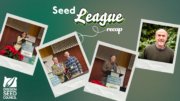
Oregon Seed Council at the 2025 Oregon Seed League Annual Meeting

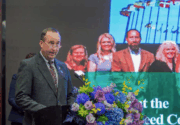
The Oregon Seed Council is celebrating industry progress, and the recognition of valuable OSC members and leaders!

Oregon Seed Council at China Trade Mission 2025

Oregon Seed Council Trade Mission to China A Success

The Oregon Seed Council successfully participated in the 2025 Oregon China Council Trade Mission to China October 28-November 12.

First and foremost, we want to recognize and say a huge thank you to our donors that made this trade mission possible:

  • Former Senator Mae Yih
  • Oregon Ryegrass Commission
  • Oregon Tall Fescue Commission
  • Oregon Fine Fescue Commission
  • Oregon Clover Commission
  • Oregon Seed Growers League
  • Oregon Seed Association
  • Dave and Lisa Goracke
  • Terry Plagmann
  • Emily Woodcock
  • Orin Nusbaum

With the support of these organizations and individuals, OSC was able to send OSC President Dave Goracke, Oregon State University Associate Professor of Practice and OSC Board Member Dr. Christy Tanner, and myself on the trade mission. We are so grateful to have had diverse industry perspectives throughout the trade mission. This enabled the seed industry to  bounce ideas off one another, observe opportunity through different perspectives, and add unique commentary to each conversation.

TRADE MISSION OVERVIEW

Because agriculture is a major import for China, and due to the fact that China has a longstanding partnership with the Oregon seed industry, the Oregon Seed Council held the industry spotlight throughout the trade mission.

The trade mission followed a multi-week expedition led by Senate President Rob Wagner, where state legislators and Oregon China Council (OCC) members teed up meetings and conversations with government officials. 

Their work opened the door for our organization and OCC to engage in friendship and trade discussions. 

Our portion of the trade mission included a number of meetings blending both government and business officials in partnership conversations. The two trade missions did not necessarily follow the same meeting path but had some intersection in regions visited. 

Primarily, the government official section before us recognized the Oregon China Sister State Committee’s work to create sister cities and build friendship and partnership with the Tianjin Municipality and Fujian Province in China.

Our mission visited Inner Mongolia, Beijing, Shanghai, and Guangxi. 

Not a minute was lost in our work. We were scheduled from morning to evening for the 16-day trade mission, and while not all activities will be referenced in this article, we will highlight some of the most significant visits and takeaways from the trade mission. 

INNER MONGOLIA – HOHHOT

Our first destination was Inner Mongolia. The delegation started in Hohhot, the Capital of the province of Inner Mongolia. 

This was the most extensive agricultural leg of the trade mission, where the delegation visited a seed research facility, multiple dairies, the Inner Mongolia Agriculture University, met with government officials multiple times, including for a hay deal signing, and OSC presented before a large room of business leaders and government officials in Inner Mongolia.

M-Grass was one of the first stops, and this business is the national seed research center for China, specializing in ecological restoration, forage, and turfgrasses. Inner Mongolia’s northern border is a desert climate and their work supports application of seed for reclamation projects, including reversing desertification – which is a major issue for the area.

The facility houses a large catalog of seed and soil samples with over 1 million soil samples collected and housed on site and significant numbers of viewable seed catalogues. M-Grass focuses on projects solely within China’s borders.

While we were at the facility, we asked about the largest pest issue, and the team said mice is the number one issue for the industry. This might be a research partnership opportunity as we assess how to address our vole issue.

We visited two dairies in the first couple of days of the trade mission: 1. Mengui, which is China’s number one dairy and number three business in the nation. 2. Yili is the second ranked dairy in the nation and notably has 1,000 product lines.

Dairy has not been a significant staple in the Chinese diet, but this is now rapidly changing with the next generations. Generally, both dairies supply products across China focusing on feeding the 1.4 billion population, with some international impact through the FIFA World Cup and the Olympics.

Both dairies have seen exponential growth over the last few years, and notably, are heavily invested in by the government.

We were able to see some notes on blends for feed, and primarily, it looks like Alfalfa Hay is the number one product in feed, OSC engaged in conversations with dairy officials for these two companies on potential for blend of tall fescue, more ryegrass, clover, and potential for other forage in animal feed.

At the Inner Mongolia Agriculture University, we saw a significant collection of seed and plant samples. The university has a grassland focused program, and heavy overlap with Oregon’s commodities, including sugarbeets, dairy, and animal husbandry.

The University does exchanges with other universities, and we see potential opportunities for exchanges between OSU and the Inner Mongolia Agriculture University, where research could be shared to help both us and Chinese partners understand soil and climate needs, allowing us to best recommend Oregon seed for the region.

Early on the trade mission, OSC was asked to present as one of six businesses at a trade promotional forum. The forum included around 50 business and governmental leaders in addition to our Oregon delegation.

OSC provided information on:

  • Who we are and our members
  • Oregon seed products
  • The importance of relationships with China
  • Oregon’s exceptional quality
  • Research
  • OSU certification, and 
  • Our desire to learn more about China’s needs and build partnerships. 

We also highlighted the benefits of various Oregon seed crops.

Our delegation members noted to us on this and other occasions how well OSC was perceived and presented our industry.

For this meeting, both Dave and I presented, and called out Christy as our research expert for  participants to visit with after the presentation. This gave us a significant opportunity to build contacts.

Starting in Inner Mongolia, we had robust meetings and meals with government officials. Primarily, we met with officials from the Foreign Affairs Office of the People’s Government – but also leaders in economic development, education, commerce and other areas of interest to our industry.

Of note, by the end of the trade mission – both our leaders and our host government officials spoke highly and advocated for Oregon’s seed industry. 

Relationships are key. Before we left for China, tariffs and international relations with China were rocky. The importance of relationships was demonstrated during a meeting between Oregon State Representative Mark Owens with Dai Qin – Vice Chairman of the People’s Government of Inner Mongolia Autonomous Region. During this and many future meetings during the trip, the meeting between President Trump and President Xi Jinping in South Korea was referenced. That engagement between the two countries’ leaders was significant for all of our meetings, as were the meetings held by Oregon Senate President Wagner and other members of Oregon’s delegation prior to our arrival in China.

Government to government relations are critical, so having our legislative leaders – Oregon State Representative Mark Owens and Senator Lew Frederick participate with us – set the Oregon Seed Council and seed industry up for success for international business relationships.

INNER MONGOLIA – ORDOS

Ordos presented several opportunities for us. Cashmere is a booming industry in Ordos. We visited photovoltaic locations – which have a significant impact in the area. We also visited an animal husbandry tech park where we were able to learn more about feed and opportunities to connect and discuss blend options. We also were able to connect with business and government leaders at each stop.

Erdos Cashmere (a large cashmere producer in Ordos) was a great contact for OSC. We learned there are 200 different grass varieties used to feed their 800 goats and all OSC team members were able to connect with the general manager regarding Oregon seed use in feed blends.

Across Inner Mongolia, we saw significant investment in renewable energy, including through wind and solar. Some of the items we saw that may be of interest to our industry include automation and autonomous EV technology. We saw electric vehicle development where vehicles could come to a power exchange to fully replace batteries to move agricultural products.

Generally, there was a significant focus on automation in all things, including in manufacturing lines.

Along with the Oregon delegates, government officials joined us at each tour stop. We were able to visit with the Ordos Vice Mayor and engage with staff, building cultural understanding and relationships.

BEIJING

Beijing, the Capital, provided OSC an opportunity to share high level messages about the seed industry with key leaders.

Dave and I visited the U.S. Embassy and spoke with Deputy Chief Mission (DCM) Gregory May, U.S. Embassy, China (second to the U.S. ambassador), and representatives of Agricultural Trade Office, Foreign Agricultural Services, APHIS, and other USDA staff about the seed industry, potential for partnership, interest in helping build markets for tall fescue, ryegrass, clover, and other forage with the dairies, and spoke with the APHIS leads on the anguina testing issue in annual ryegrass.

From there, OSC was connected with ASTA’s contact in China to navigate regulatory issues.

The staff helped the delegation members navigate some complexities in international affairs with China and understand how various national level engagements are impacting trade.

While not a direct connection for our industry, we were delighted to have an opportunity to share with the China National Food Industry how cover crops are utilized in the U.S. and what Oregon products can do for Chinese producers. Throughout the trade mission, we recognized cover crops were not being used in China. We think there are significant opportunities with the members of the China National Food Industry to educate growers on how to enhance production in China.

During our visit with officials from the Ministry of Commerce, OSC was able to provide a short presentation on the seed industry and opportunities across China, including for erosion control, preventing desertification, beautification in the larger cities, cover crops, and for other agricultural seeds. Christy was able to highlight seed certification and quality standards and the benefits of Oregon grass seed.

We worked closely with Representative Mark Owens to help tee up questions and point the conversation to OSC and our member crops.

SHANGHAI

Shanghai’s primary focus was the China International Import Expo. While we had a shared booth with WUSATA, our space was small and tucked away. We found it to be most useful to take the opportunity to meet with officials on-site. We did receive a number of contacts by leaving our business cards at the booth and mingling with participants. We have significant follow up to do!

During the Expo, Megan was able to meet with the in China ASTA rep to discuss the anguina issue. During the meeting the rep, who is a Chinese national, was highly impressed with our meeting itinerary and wanted to know how we were able to schedule the high-level meetings we had.

Dave was able to meet with the U.S. Deputy Consul General of Shanghai – Navarro Moore to talk through the angina issue and promote Oregon seed.

We also met with the delegation of the Nike Beijing partners and highlighted a need to have support in promoting natural turf for safety of athletes.

GUANGXI

Guangxi is primarily looking for a partnership for tourism. It’s a tropical region and has limited opportunities for the seed industry due to climate. However, a big takeaway from our visit to Guangxi was our visit with the Guangxi Normal University. 

While they are focused on bringing in international students, and seeing partnership with universities, we found an opportunity for OSU at this forum. The University staff, who focuses on the life science program, is interested in bringing in grass, agriculture, and husbandry, particularly an education exchange to support habitat restoration.

During this meeting, OSC highlighted the Oregon-China partnership and our appreciation of China as a lead trade partner; quality and purity; and desire to collaborate.

While in Guangxi, we did see some interesting innovation, including through the Beibu Gulf Port, where the operations have heavily shifted to automated. There are self driving trucks, automated cranes, and a production line that is moving products with very little need for employees.

Finally, in Guangxi, the delegation met with H.E. Chen Gang – Secretary of the CPC Guangxi Committee along with a number of key government officials, including education, transportation, economic development, commerce, and others.

A Memorandum of Understanding was signed to recognize the friendship between Oregon and the province. This was again a valuable meeting because we were able to meet with officials and build relationships.

TAKEAWAYS/OPPORTUNITIES

  • Relationships matter
  • The experience was one-of-a-kind and the Oregon China Council was instrumental in its success
  • Bringing diverse industry perspectives is critical
  • China’s market has vast potential for the Oregon seed industry
  • Education on cover crops would help Chinese partners
  • Research on benefits of Oregon seed in forage blends needs to be shared to support the livestock industry
  • Erosion control is a high need as crops are planted across slopes
  • Inner Mongolia has significant need for support in preventing desertification
  • There are plenty of opportunities for beautification projects
Megan Chuinard

Executive Director

Oregon Seed Council


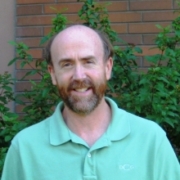
Photo of Dan Curry

Meet the Oregon Seed Council: Oregon State University Department of Crop and Soil Science Representative, Dan Curry 

ABOUT DAN CURRY

Dan Curry is the Oregon State University (OSU) Department of Crop and Soil Science representative on the Oregon Seed Council Board of Directors. Dan has been the Director of Seed Services at OSU since 2006. Seed Services includes working with the OSU Certification unit, OSU Seed Lab and the Foundation Seed area. Dan has a BS in agronomy from South Dakota State and MBA from Iowa State. He was the Manager of the Iowa State University Seed Lab for six years before taking on the role as Director of Seed Services at OSU. He worked for three years as a business outreach and development specialist and six as a research associate, both at Iowa State. Dan has over ten years of seed industry experience as a seed plant and production manager with two different companies.

Dan is a long-time member of the Oregon Seed Council Board of Directors and helps lead the OSC Seed Services Advisory Committee. He plays an important role in providing resources, information, and connecting members to services and research at OSU. 

ABOUT OREGON STATE UNIVERSITY DEPARTMENT OF CROP AND SOIL SCIENCE

Oregon State University (OSU), located in Corvallis, is a leading public research university known for its strong programs in agriculture, engineering, forestry, oceanography, and environmental sciences. It’s Oregon’s largest university and a land-, sea-, space-, and sun-grant institution—one of only three in the U.S. OSU plays a vital role in regional innovation and sustainability, with deep ties to industry and government, especially in agricultural and environmental research. 

The Department of Crop and Soil Science at Oregon State University focuses on solving challenges in field crop agriculture, soil health, and natural resource management through hands-on learning and cutting-edge research. It offers undergraduate and graduate programs in agronomy, soil science, and plant breeding, preparing students for careers in sustainable agriculture and environmental stewardship.

WHAT INTERESTS DAN IN THE SEED INDUSTRY

When asked what interests Dan in the seed industry, he said, “working with the seed growers and understanding the issues they have to go through each year.

WHAT DAN LOVES ABOUT THE OREGON SEED COUNCIL

What Dan loves most about the Oregon Seed Council is, “Meeting up with all of the industry folks and seeing the next generation take over the leadership.

 WHAT DAN SEES FOR THE FUTURE OF THE OREGON SEED COUNCIL

Looking toward the future, Dan said, “I see the OSC playing a key role in leading the industry through legislative, technical, and relationship issues.

WHAT DAN WISHES PEOPLE KNEW ABOUT THE SEED INDUSTRY 

When asked what Dan wishes people knew about the seed industry, he said he wishes people knew that “Oregon family farms are raising turf and forages grass seed that are sold around the world.”

In fact, the Oregon seed industry exports an estimated $162,824,215 in grass, clover, and forage seeds to 56 countries, and grass seed is Oregon’s number four commodity.

HOW DAN GOT INVOLVED IN THE SEED INDUSTRY

Dan grew up on a family seed farm, and has stayed involved in agriculture throughout his career.

WHAT DAN DOES OUTSIDE OF THE SEED INDUSTRY

When he’s not working, Dan is a coffee-connoisseur, and can be found striving to make the seemingly unattainable perfect cup of coffee. But, of course, while practice makes perfect (or close to it), rest is important, and Dan rests up by gardening, reading, and preparing for that next day’s cup of coffee.

Contributed by: Megan Chuinard | OSC Executive Director

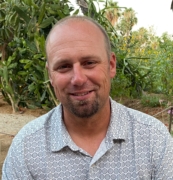
Colin Scott Headshot

Meet the Oregon Seed Council: Oregon Fine Fescue Board Representative, Colin Scott 

ABOUT COLIN SCOTT

Colin Scott represents the Oregon Fine Fescue Commission on the Oregon Seed Council Board of Directors. Colin focuses on seed production and procurement as a field Agronomist for Scotts MiracleGro, which is headquartered in Marysville, Ohio.

ABOUT THE OREGON FINE FESCUE COMMISSION 

The Fine Fescue commission collects fees from pounds produced to put towards research and promotion of the species and the commissioners are responsible for making sure those funds get allocated correctly.

WHAT INTERESTS COLIN IN THE SEED INDUSTRY

When asked what interests Colin in the seed industry, he stated, “I started in the seed industry right out of high school and quickly got interested in it because of the variability you see year-to-year in crop challenges and successes.”

WHAT COLIN LOVES ABOUT THE OREGON SEED COUNCIL

When asked what he loves about the Oregon Seed Council, Colin said, “I think the Seed Council does a great job at keeping in tune with what is happening in the seed industry and helping farmers and companies find ways to improve from and fight those challenges.”

WHAT COLIN SEES FOR THE FUTURE OF THE OREGON SEED COUNCIL

Colin says looking forward, the Oregon Seed Council will “continue to improve the benefits the Seed Council can bring to our farmers.”

WHAT COLIN WISHES PEOPLE KNEW ABOUT THE SEED INDUSTRY AND THE OREGON SEED COUNCIL

Colin wishes people knew, “growing seed is not as easy as it looks to the general public.”

 COLIN’S SERVICE TO THE SEED INDUSTRY

Colin began in the seed industry as a summer employee in research and development.

WHAT COLIN DOES OUTSIDE OF THE SEED INDUSTRY

When Colin isn’t busy with work and helping the Oregon Seed Council, he enjoys hunting and following Oregon State athletics.

Contributed by: Megan Chuinard | Oregon Seed Council Executive Director

From a Rodeo Ground to a Football Field

Every year, the St. Paul Rodeo Grounds is reseeded into a grass football field for Friday Night Lights, and Oregon grass seed makes it possible.

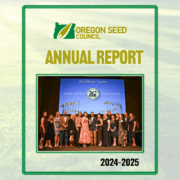
OSC Releases 2024-2025 Annual Report

Another fiscal year has come and passed, and I am excited to share with you our achievements from 2024-2025.

The Oregon Seed Council has made exceptional strides in delivering services for our members and In implementing our strategic planning work, in government affairs, public relations, and organizational funding.

In the OSC 2024-2025 Annual Report, you’ll see a snapshot of our work over the last year, however, it’s challenging to encapsulate all the great things our Board has done and is doing in one document. So, if you have any questions, please don’t hesitate to reach out.

Some highlights we are proud of this year include:

  • Implementing year one of OSC’s Strategic Plan; Development of social media platforms;
  • Development of an internship program in partnership with OSU;
  • A successful trip to Washington D.C. for industry advocacy and education;
  • Building policy priorities representing feedback from all of our member organizations;
  • Having significant engagement from our members during the State Legislative Session and in D.C.
  • And – significantly, this year, OSC was honored to accept the Oregon Consular Corps Global Trailblazer Award! A major achievement, recognizing the grass seed industry’s global impact in trade. More on this in later pages of the report.

A special thank you to the OSC Board of Directors, Executive Committee, Committee Chairs, committee and industry members, and partners for your work this year.

Your feedback, support, and commitment to advance the Oregon Seed Council and elevate the seed industry overall is greatly appreciated and drove our success.

We simply cannot do what we do without you!

Click here to view the 2024-2025 OSC Annual Report

Contributed by: Megan Chuinard | Oregon Seed Council

Oregon Seed Council Board Member Charles Ortiz

Meet the Oregon Seed Council: Oregon Meadowfoam Growers Association Cooperative Representative, Charles Ortiz

ABOUT CHARLES ORTIZ

Charles Ortiz is the Oregon Meadowfoam Growers Association (OMGA) Cooperative representative on the Oregon Seed Council Board of Directors. Charles is an OSC Past President, and serves on multiple OSC Committees. In addition, Charles chairs the OSC Scholarship Committee and contributes to the industry’s public relation efforts, by helping make OSC’s Exhibit at the Annual Oregon AgFest a great success.

ABOUT OREGON MEADOWFOAM GROWERS ASSOCIATION COOPERATIVE

OMGA Cooperative is a meadow farm seed production and vegetable oil production cooperative based in the Willamette Valley. OMGA formed Natural Plant Products, Inc. (NPP) as their marketing subsidiary. NPP markets Meadowfoam seed oil domestically and worldwide. OMGA consists of almost 50 member farms all dedicated to the sound production of meadowfoam and daikon radish seeds.

WHAT INTERESTS CHARLES IN THE SEED INDUSTRY

When asked what interests Charles in the seed industry, he says he most enjoys “helping farmers.” Charles’ interest in volunteerism and supporting farmers shows. He is heavily engaged in policy discussions and helping the next generations learn about the importance of agriculture.

WHAT DOES CHARLES LOVE ABOUT THE OREGON SEED COUNCIL

When asking Charles what he loves about the Oregon Seed Council, Charles says that he loves the “sense of cooperation” it brings to the industry.

WHAT CHARLES SEES FOR THE FUTURE OF THE OREGON SEED COUNCIL

In the Oregon Seed Council’s future, Charles sees a “continued success being an industry problem solving leader.” 

WHAT CHARLES WISHES PEOPLE KNEW ABOUT THE SEED INDUSTRY AND THE OREGON SEED COUNCIL

When asked what Charles wishes people knew about the Oregon Seed Council and Oregon seed industry, Charles wishes people knew “how hard the Oregon Seed Council and the seed industry as a whole work to find solutions for seed industry problems.”

HOW CHARLES GOT INVOLVED IN THE SEED INDUSTRY

Charles got an early start in the agricultural industry through moving irrigation pipes as a youth, which led him to to love and learn more about the industry and lead him to where he is now.

WHAT CHARLES DOES OUTSIDE OF THE SEED INDUSTRY

When not working, Charles can be found gardening. 

Contributed by: Megan Chuinard | Oregon Seed Council Executive Director

© Copyright - Oregon Seed Council